 Queenstown City Guide
How Far Ahead to Book Queenstown: a Season Calendar
Last reviewed 2026-09-09
How far ahead to book Queenstown is a question the town itself refuses to answer. We went through the public pages of every major operator here, and almost none of them publishes a sell-out lead time: no weeks-in-advance figure, no fill rate, no last-available-slot warning beyond a general recommendation to book early. Two organisations are honest exceptions and they are the ones worth planning around. This post sets out what genuinely needs booking and when, what you can still buy on the morning, what a cancellation window actually protects, and which parts of the calendar move without notice. It is the sequencing layer for the ticket index and for the Queenstown planning guide these pages sit in. Prices here are US dollars first with New Zealand dollars in brackets, at NZ$1 = $0.584.
Quick answer The three things to book early, and the honest gap in everything else
Book three things before you arrive and improvise the rest: the entry permit, which Immigration New Zealand says to allow 72 hours for, at $9.93 (NZ$17) plus a $58.40 (NZ$100) visitor levy; a hot pool, because Onsen releases availability only 5 to 6 months out and says it is heavily booked most days; and any Great Walk bed, because the Department of Conservation requires a booking inside the season and holds no walk-in beds. Everything else in this town is sold on a rolling calendar with no published lead time at all.
Key takeaways
- The single most time-critical booking is not an activity: it is the NZeTA and the visitor levy, which is paid together and takes up to three days to come back
- The one operator that tells you how its calendar works is Onsen Hot Pools, which sells per pool rather than per person and charges the full amount if you cancel inside 24 hours
- What fills first in practice is the long day out: the Milford coach and cruise day runs one departure a morning, and a missed seat is a missed day rather than a later slot
- Almost nothing in town needs a month's notice, which is why the ticket index is worth reading on arrival rather than in advance
The Finding: Almost Nobody Publishes a Lead Time
This is the most useful thing on the page, so it goes first. Across the gondola, the jet boat, both bungy sites, the skydive operator, the lake steamer, the Fiordland day cruises and the ski fields, not one public page states how far ahead its slots sell out.
What they publish instead is encouragement. RealNZ says pre-booking Walter Peak is recommended because availability is limited, without saying limited to what. Skyline's only scarcity statement is that its unlimited luge pass is withdrawn during peak holiday periods, which tells you nothing about the ordinary ticket. AJ Hackett publishes no departure times at all for the Nevis, let alone a booking window, and says to check with them. Nobody prints a figure, and the figures circulating on other sites are therefore guesses wearing the clothes of research.
There are exactly two exceptions we could verify, and both are worth building a trip around.
The first is Onsen Hot Pools at Arthurs Point, which explains its own calendar: availability is released 5 to 6 months ahead, ran to the end of January 2027 when we read it, and the operator states plainly that it is heavily booked most days. Pools are sold per pool rather than per person, which is why the arithmetic feels wrong the first time: two people in the Original pool pay $105.10 (NZ$180) between them, not double the single-bather fare of $71.30 (NZ$122).
The second is the Department of Conservation. Inside the Great Walks season, currently 1 November 2026 to 30 April 2027, a Routeburn hut or campsite booking is required, DOC holds no walk-in beds, and it runs random residency checks in the huts because the price depends on where you live: $77.10 (NZ$132) for an international adult against NZ$88 for a New Zealand resident. The Moke Lake campsite, twenty minutes from town, is the same principle in miniature: booking is mandatory at $10.51 (NZ$18) an adult, and DOC keeps nothing back for people who turn up.
What to Book, When, and What It Costs
Every lead time in the middle column is the organisation's own published statement, read in Q3 2026. Where it says not published, we could not find any lead-time figure on that operator's public pages, and the last column is our own routing rather than anyone's rule.
| What you are booking | Published lead time | Price | Our routing |
|---|---|---|---|
| NZeTA and visitor levy | Allow 72 hours (Immigration NZ) | $9.93 (NZ$17) plus $58.40 (NZ$100) | Before you book anything else |
| Onsen hot pool | Released 5 to 6 months ahead; heavily booked most days | $71.30 (NZ$122) for one, $105.10 (NZ$180) for two | As soon as your dates are fixed |
| Routeburn hut, in season | Booking required, no walk-in beds (DOC) | $77.10 (NZ$132) international adult per night | Months out; the season is 1 November to 30 April |
| Milford coach and cruise day | Not published | $170.50 (NZ$292) from the operator | A week out, and pick the date on the forecast |
| Nevis bungy | Not published; departure times not published either | $230.70 (NZ$395) | Early in your stay, not on the last morning |
| Ski day, Coronet Peak or The Remarkables | Not published; child fares not published either | $105.10 (NZ$180) adult Superpass | The night before, on the snow report |
| Skyline gondola | Not published; only the unlimited luge is withdrawn at peak | $40.30 (NZ$69) return | On the morning, when you can see the summit |
Read the middle column downwards and the pattern is obvious: the two organisations that publish a lead time are a spa and a government department, and both of them do it because their capacity is genuinely fixed. The commercial adventure operators run rolling calendars with variable capacity, which is why they can afford to say nothing, and why a general recommendation to book early is the most any of them will commit to.
The Calendar, Season by Season
December to February: the only genuine pressure
Peak summer is the one window where advance booking is a real advantage rather than a habit, and the pressure is on beds and vehicles more than on activity slots. It is also the period when prices step: Ziptrek, for example, publishes stepped fares with a peak window from 19 December, so a booking made before a step locks the lower fare, which is a better reason to book ahead than scarcity.
The things to fix in advance in this window are accommodation, a rental car and any single-departure day trip. The things you can leave are the gondola, the luge, the jet boat and both bungy sites, all of which run multiple departures a day, seven days a week.
June to October: book the weather, not the calendar
Winter inverts the problem. Nothing is fuller than in summer, but far more can be cancelled, and the ski season dates themselves are provisional. On the sources we read, the regional tourism organisation gave Coronet Peak as 13 June to 4 October while NZSki's own material described a targeted season from 29 May, extended by a new snow factory. That is a fortnight of disagreement between two official sources about when a mountain opens, and it is a good reason not to buy a non-refundable ski package around an opening date.
The practical routine in winter is to book beds ahead and buy lift passes and activities a day at a time, on the snow report, which NZSki updates daily by 06:30. The winter page has the rest, and the best time to visit page sets the seasons against each other.
The dates that move without notice
Three things on the Queenstown calendar reset annually and catch people who booked around last year's version. The lake steamer goes out of service for annual maintenance every winter, and the window moves: in 2026 it ran from 18 May to 26 June, and in 2025 it was far longer. The ski fields publish tentative season dates that shift with the snow.
And events are worse than either: the Queenstown Marathon has a fixed date of 14 November 2026, but the winter festival as it once ran no longer exists, and several other regular fixtures had no published dates for the coming year when we checked. Read the events calendar rather than assuming an annual event is still annual.
What You Can Always Buy on the Day
This is the other half of the answer, and it is longer than most visitors expect. Almost everything inside the town runs daily and takes walk-up custom.
The gondola runs every day of the year, with hours published as a rolling weekly table rather than a season, so the only thing to check is the current week. The Kawarau Bungy Centre is open daily except Christmas Day, 08:30 to 17:00 from October to April and 09:00 to 16:30 from May to September, with last activities half an hour before closing, and watching costs nothing at all. Shotover Jet departs between 09:30 and 16:00 seven days a year-round, with check-in 30 minutes before at the base or 45 minutes before in town if you are taking the shuttle. The Lakes District Museum in Arrowtown opens 9:00 to 17:00 every day except Christmas Day, at $8.18 (NZ$14) for an adult. Queenstown Gardens has no gate and no charge.
Two qualifications worth knowing. The bird park sells admission against a timed encounter slot rather than as open entry, and it closes online sales for the current day at some point in the afternoon, so it is a walk-up that rewards arriving early. And the hot pools are the one in-town experience that genuinely is not a walk-up, for the reasons above.
What none of this covers is a day trip. A Fiordland day, a Mount Cook day and the Nevis all run to a single departure, so a same-day decision is a decision to take whatever is left rather than what you wanted.
What a Cancellation Window Actually Protects
Free cancellation is the reason booking ahead is usually harmless, and it is worth understanding what it does and does not cover.
The operator terms we could verify are narrow. Onsen gives 24 hours, extended to 72 hours for a booking of three or more pools, and charges 100% inside that window. That is a real policy with a real number, and it is the exception again rather than the rule.
What we could not find anywhere is a published weather-cancellation policy. Not one of the major adventure operators here states a wind limit, a visibility cutoff or a refund rule for a weather day on its public pages. Shotover Jet says it runs in light rain and that heavy rain or flooding cancels, which is the closest thing to a stated threshold in the whole set, and it is still a description rather than a rule. Skyline sells a ride up a hill and promises no view at the top of it.
So the protection you actually have on a weather day comes from two places: the booking platform's own cancellation terms, which are stated on each listing at checkout and are usually a fixed number of hours, and the operator's discretion, which is not a policy. Book the weather-dependent things early in a stay so that a cancelled day has somewhere to go, and keep the last day of a trip clear of anything that cannot be moved.
The other thing worth carrying: New Zealand's no-fault accident scheme covers a visitor injured in an accident here, but it does not cover a disrupted trip, a cancelled onward flight or getting you home, and it says so itself. The safety and hazards page sets out where that line falls.
How Far Ahead, by the Trip You Are Having
If you are flying in from outside New Zealand
Start with the permit. Immigration New Zealand says to allow 72 hours for an NZeTA, and the levy is charged with it and never refunded, even on a declined application.
If you want a hot pool at a specific hour
Book it the day your dates are fixed. Onsen releases 5 to 6 months of calendar and describes itself as heavily booked most days; nothing else in town publishes anything comparable.
If you are walking a Great Walk between November and April
Months ahead. DOC requires the booking, holds no walk-in beds, and prices an international adult at $77.10 (NZ$132) a hut night against NZ$88 for a resident.
If you have three days and one of them is a fiord day
Book the fiord about a week out on the best-looking forecast day, and leave the in-town activities to be bought on the morning.
If you are here to ski
Book the beds, not the passes. Season dates are published as targeted or tentative, and the two official sources we read disagreed by a fortnight on when Coronet Peak opens.
If you have arrived with nothing booked at all
You are fine. The gondola, the luge, both bungy sites, the jet boat and the museums all take walk-ups daily, and the ticket index prices them side by side.
The Bookings Worth Making Before You Land
The five things in this town that run to a single departure or a fixed capacity, which makes them the ones a late decision actually costs you. Prices are the platform's own listed figures and are confirmed at checkout, where each listing also states its own cancellation window.
 from $137.55
Most booked
from $137.55
Most booked Queenstown: Milford Sound Coach & Cruise Full-Day Trip
The volume option, and the one most visitors actually book: hotel pickup, the coach down, a cruise with three viewing decks, back the same night. Twelve hours, and the least you can pay to reach the fiord.
Check Availability from $231.20
Highest rated
from $231.20
Highest rated Queenstown: Nevis Bungy - THE BIGGEST
Australasia's highest jump: 134 metres from a pod you reach by cable car strung over the Nevis River. Allow four hours for the 4WD road out and back, and note that 13 is the minimum age.
Check Availability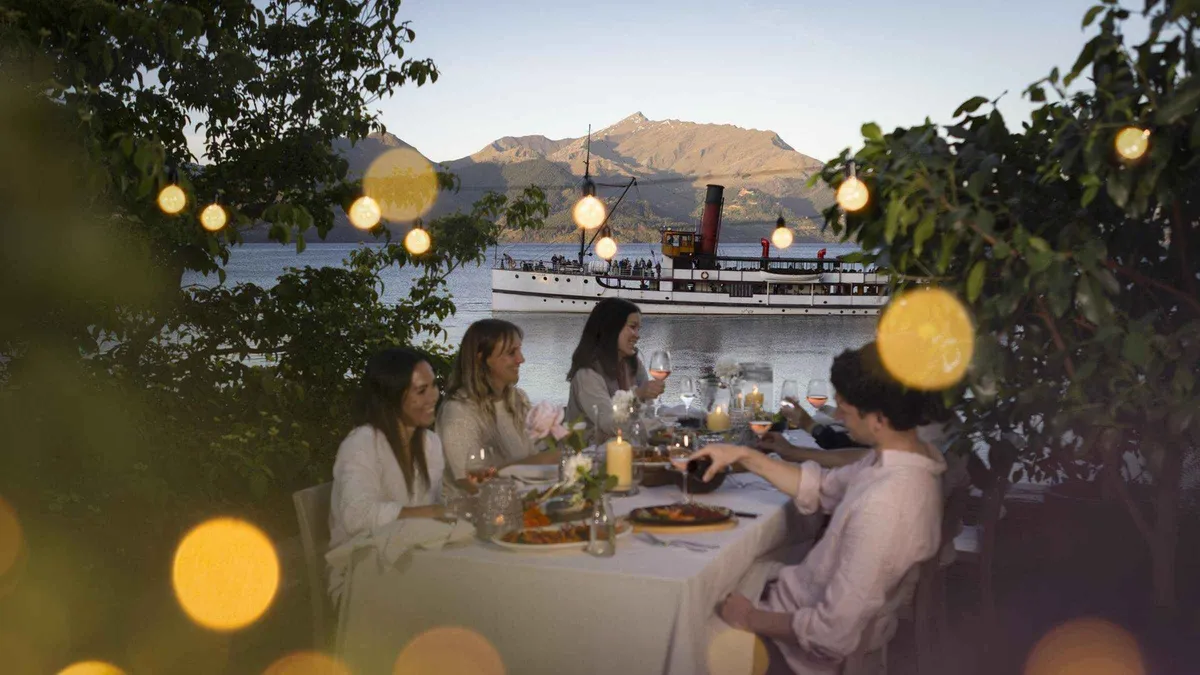 from $98.92
Most booked
from $98.92
Most booked Queenstown: Walter Peak Gourmet BBQ & Lake Whakatipu Cruise
Crosses to Walter Peak and stays for the gourmet BBQ buffet in the homestead, with the farm dog demonstration afterwards. Three and a half hours, and the only option here where a full meal is in the price.
Check Availability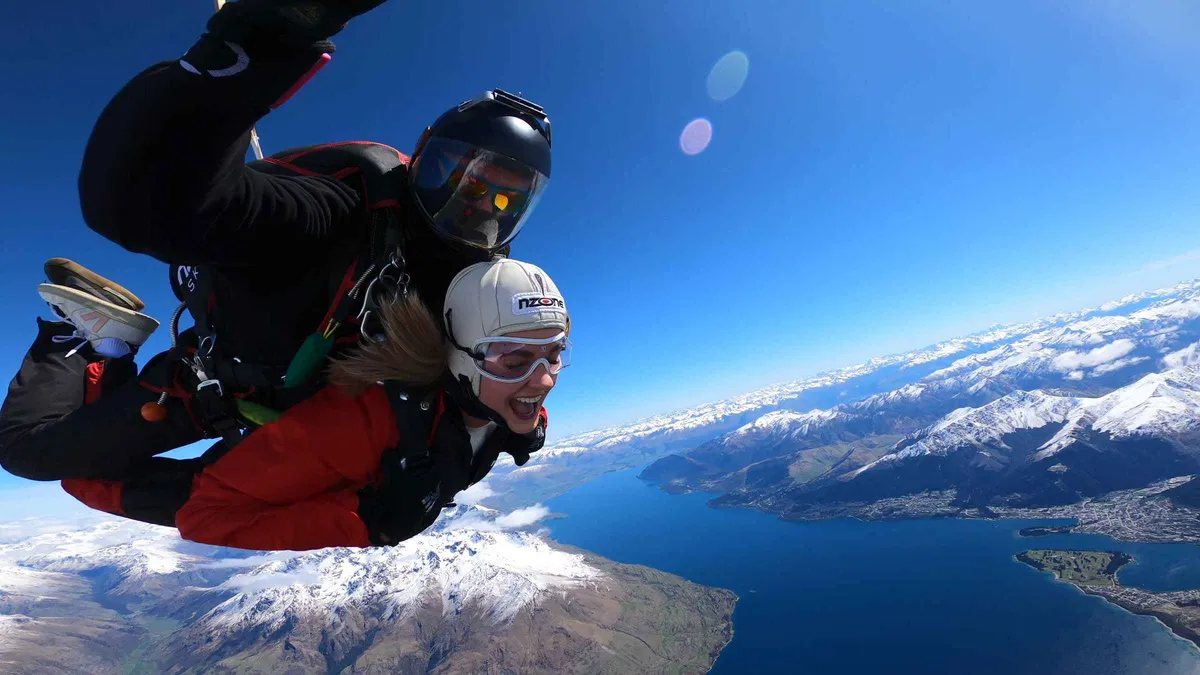 from $210.13
Queenstown: Tandem Skydive Experience
Three altitude options, 9,000, 12,000 or 15,000 feet, from the drop zone over the Wakatipu Basin. Allow three hours on the ground: the freefall lasts under a minute and the canopy ride about five.
Check Availability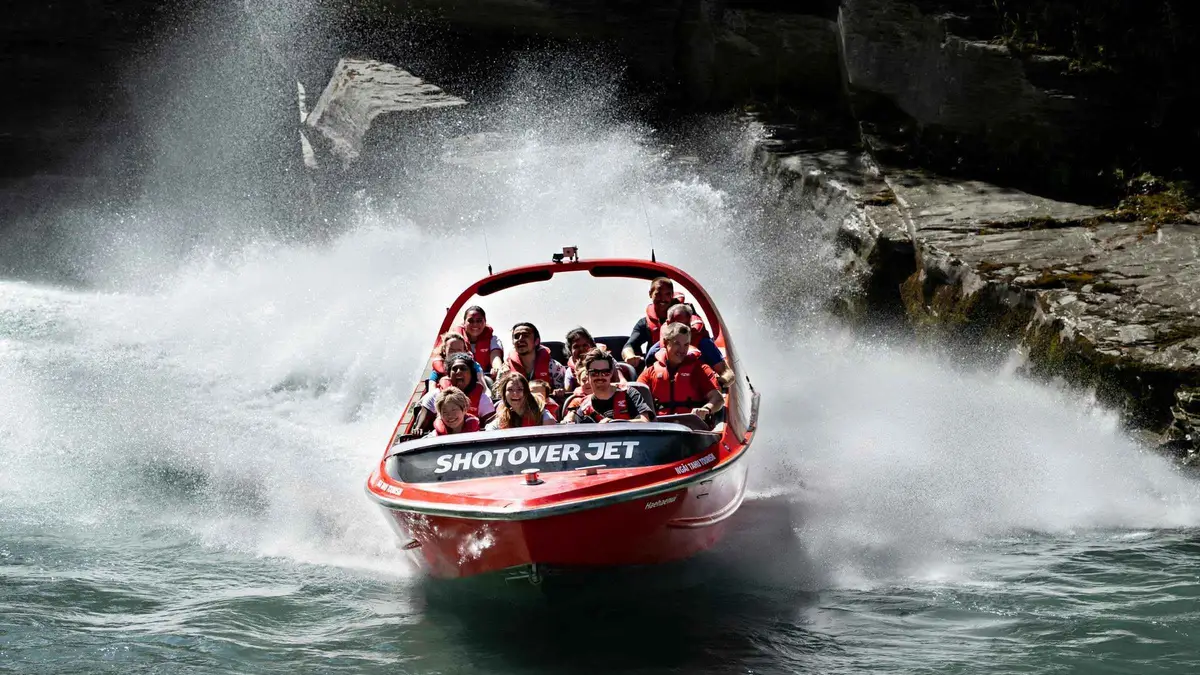 from $116.48
Queenstown: Shotover River Extreme Jet Boat Experience
Twenty-five minutes inside the Shotover Canyons, which no other jet boat operator is permitted to enter: 90kmh between rock walls, with the 360-degree spins the ride is known for. Handrails are heated in winter.
Check AvailabilityPrices, ratings and details are the platform's own, checked in Q3 2026; dollar figures are the listed prices — the platform bills in your account's currency.
Booking Queenstown in Advance: the Questions People Actually Ask
Does anything here really sell out?
Some do, but almost no operator will tell you how far ahead. We checked the public pages of the gondola, both bungy sites, the jet boat, the skydive operator, the lake steamer and the Fiordland cruises, and none publishes a sell-out lead time. The two organisations that publish anything concrete are Onsen Hot Pools, which releases 5 to 6 months of availability and says it is heavily booked most days, and the Department of Conservation, which requires hut bookings in the Great Walks season and keeps no walk-in beds.
How far ahead should I apply for the NZeTA?
Immigration New Zealand says to allow 72 hours. It costs from $9.93 (NZ$17), lasts two years for multiple entries, and the $58.40 (NZ$100) International Visitor Levy is charged at the same moment and is never refunded, including on a declined application. The separate New Zealand Traveller Declaration is free and can be submitted from 24 hours before you start travelling.
Is it cheaper to book ahead or to turn up?
Neither, in most cases. No operator here publishes a separate walk-up price to compare against, so there is no gate premium to avoid and no advance discount to chase. The one genuine money reason to book early is a scheduled price step: Ziptrek, for instance, publishes stepped fares with a peak window beginning 19 December, and a booking made before a step holds the earlier fare.
What can I leave until the morning?
The gondola and luge, the Kawarau bungy and swing, the jet boat, the Arrowtown museum, the ice arena and every free walk. All of them run daily with multiple departures or open hours, and buying the gondola on the morning has the advantage that you can see whether the summit is in cloud first.
What happens to my booking if the weather turns?
That depends on the platform, not the operator, in most cases. We could not find a published weather-cancellation policy, wind limit or refund rule on the public pages of any of the major adventure operators here; the closest is Shotover Jet stating that it runs in light rain and cancels for heavy rain or flooding. Your practical protection is the cancellation window stated on the listing at checkout, so read it before you pay and book weather-dependent activities early in a stay.
How far ahead should I book accommodation?
Further ahead than anything else, and especially around a fixed event: the Queenstown Marathon is on 14 November 2026 and fills beds across the basin. Beds and rental vehicles are the genuinely constrained resources here, not activity slots, and the where to stay page compares the areas before you commit to one.