 Queenstown City Guide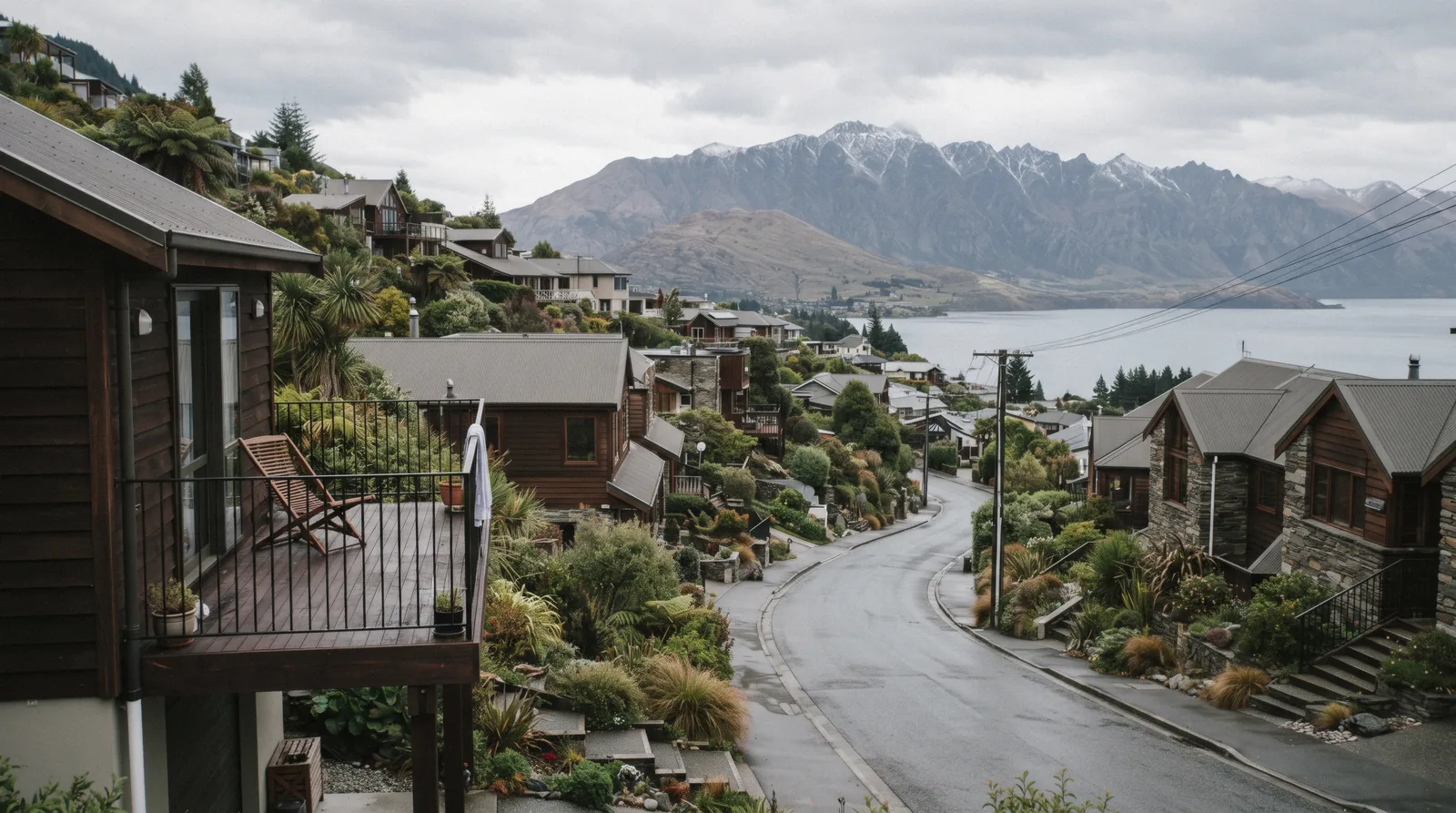
Where to Stay in Queenstown: Six Areas, Priced and Compared
Where to stay in Queenstown is a question about evenings and buses, not about distance, because the whole basin fits inside twenty-five scheduled bus minutes. This page prices six areas against each other using the middle half of the nightly rates Google Hotels returned for one midweek October night, sets each band beside the Otago Regional Council's own published running times, and then covers the things a rate does not show you: which room the council requires to be registered before it is let, why there is no bed tax on your bill, and what happens to all six bands on a peak night. It sells areas, not hotels, and the four areas with the most searches have pages of their own. What sits within reach of each area is on the Queenstown travel guide homepage.
Quick answer The six areas, what a night costs in each, and how long the bus takes
Frankton returned the cheapest and by far the tightest band of the six areas priced here, $105 to $150 (NZ$179 to NZ$257) for a midweek October night, while the town centre ran $119 to $269 (NZ$203 to NZ$460) and buys a walk home instead of a bus ride. Every area below sits inside twenty-five scheduled bus minutes of the Stanley Street hub, so the real question is what you want to be able to do at ten at night.
Key takeaways
- The safest cheap base is Frankton, where the band is the narrowest of the six and Route 1 is timetabled at thirteen minutes into town: what that trade actually feels like is on the Frankton area guide.
- Pay the central premium only if the evenings are the point. Shotover Street trades until half past two in the morning, and the noise question in the town centre is the one thing a rate band cannot tell you.
- There is no bed tax here. The 2019 referendum passed and the levy has been on hold ever since, so the nightly rate and GST are the whole number you pay.
- Sleeping across the water is a boat ride rather than a detour, and the Kelvin Heights ferry is the reason it works; the lake trips themselves, like the steamship from Steamer Wharf, leave from the town side.
The Six Areas, Side by Side
Six areas compared on the two things that actually decide a base: the Otago Regional Council's own published running time into the Stanley Street bus hub, and the middle half of the nightly rates Google Hotels returned for a midweek night, Wednesday 21 October to Thursday 22 October 2026, two adults. Dollars first, New Zealand dollars in brackets.
| Area | Into the town centre | Bus route | Midweek band | Suits |
|---|---|---|---|---|
| Queenstown town centre | On foot. Stanley Street is the interchange, and Steamer Wharf is about five minutes from it | Routes 1, 4 and 5 all call here | $119–269 (NZ$203–460) | One or two nights, no car, late dinners, an early bus to the mountain |
| Frankton | 13 scheduled minutes by bus; on foot the Frankton Track is 8.5 km and 1.5 to 2 hours | Route 1 west into town, Route 2 east to Arrowtown | $105–150 (NZ$179–257) | Early flights, a hire car, a supermarket shop, a fixed nightly number |
| Fernhill and Sunshine Bay | 12 scheduled minutes from the Treetops stop; the road walk back from town is uphill | Route 1 | $61–309 (NZ$105–529) | A lake view for less, if you are content to ride the bus in and out |
| Kelvin Heights | 20 minutes by bus to the Frankton hub, then a change; or the ferry straight across the arm | Route 3, plus the Orbus ferry from Bayview | $160–232 (NZ$273–397) | Golf, a boat commute, and looking back at the town rather than standing in it |
| Arthurs Point | No timing point is published for it, so no scheduled minutes exist | Route 4, which stops at Arthurs Point (Coronet Hotels) in both directions | $117–425 (NZ$200–727) | A car, the Shotover canyon, a brewery with ten taps and a fireplace |
| Arrowtown | 25 scheduled minutes from Stanley Street, or 18 from the Frankton hub | Route 4 from town, Route 2 from Frankton | $126–323 (NZ$215–552) | Autumn colour, a two-hat dinner at the end of the street, going to bed at ten |
Running times are the scheduled minutes between timing points in the Otago Regional Council's September 2025 Queenstown timetable booklet, not door-to-door times from a particular hotel. Route 4 absorbed Arthurs Point in mid-2025 and the Frankton hub stops changed again in mid-2026, so check the council's alerts page before you rely on a connection. Bands are one night's rates read in Q3 2026.
What Each Base Puts You Closest To
One booking per area, chosen because the area is what makes it easy: the steamship leaves the town-centre wharf, the jet boat runs from Arthurs Point, the wine road and the trail both start at the Frankton end of the basin. Prices and ratings as listed by the operators in Q3 2026.
 from $69.65
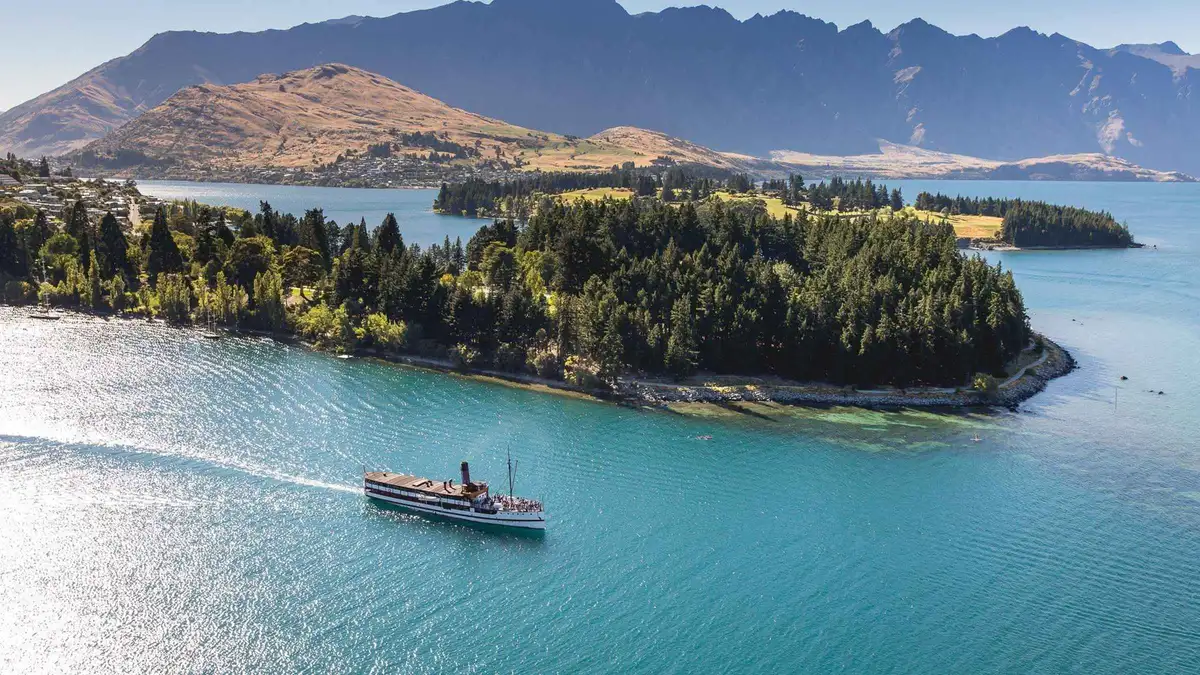
Queenstown: TSS Earnslaw Cruise of Lake Whakatipu
The steamer and nothing else: 90 minutes on the lake, the engine room open to walk through, the stokers feeding the coal fire in front of you. The shortest and cheapest way onto the 1912 vessel.
Check Availability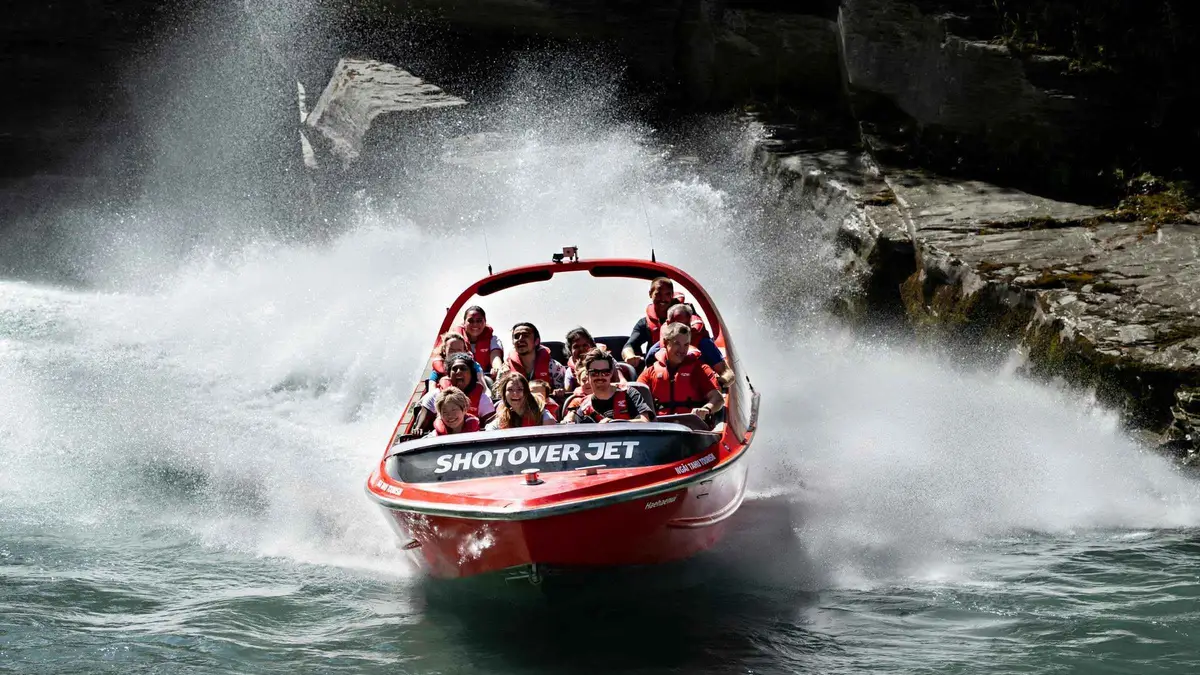 from $116.48
Queenstown: Shotover River Extreme Jet Boat Experience
Twenty-five minutes inside the Shotover Canyons, which no other jet boat operator is permitted to enter: 90kmh between rock walls, with the 360-degree spins the ride is known for. Handrails are heated in winter.
Check Availability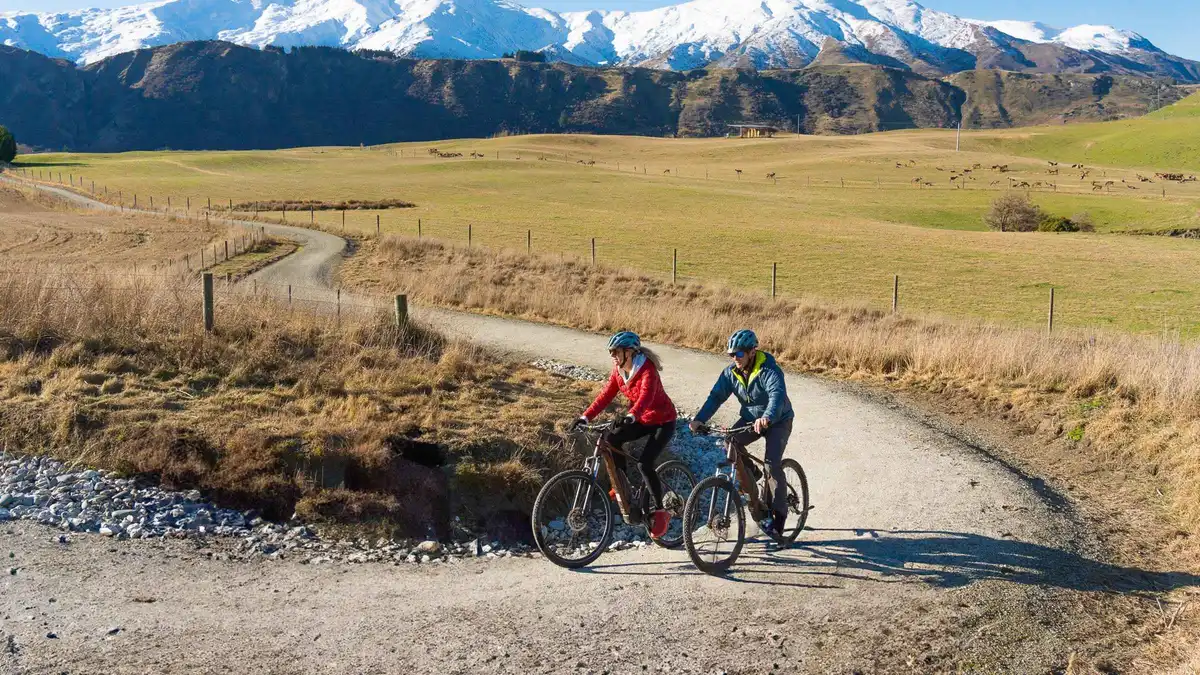 from $61.46
Queenstown: Arrowtown To Queenstown Biking Adventure
A one-way ride: the shuttle carries you and the bike out, then you pedal the 35 kilometres back along the rivers and lake edge into town. Five hours at an easy pace, standard bike or e-bike, ridden unguided.
Check Availability from $57.95
Cheapest way in
from $57.95
Cheapest way in Queenstown Wine Tour: Explore Arrowtown & Gibbston Wineries
A guided shuttle rather than a fixed tour: you choose the wineries and how long you linger, across Arrowtown and Gibbston. Tasting fees and food are paid at each door, which is why the fare sits lowest here.
Check AvailabilityPrices, ratings and details are the platform's own, checked in Q3 2026; dollar figures are the listed prices — the platform bills in your account's currency.
How These Bands Were Built, and What They Are Not
Every price on this page comes from one query set run against Google Hotels through DataForSEO, and the method matters more than the numbers.
We asked Google Hotels for each area by name, for two adults, in New Zealand dollars, for a single midweek night: Wednesday 21 October to Thursday 22 October 2026, roughly six weeks out from the day the query ran. Then we threw away the extremes. The band you see is the middle half of the properties that returned a price, the twenty-fifth to the seventy-fifth percentile, which is a fair description of what a normal room costs and a poor description of what the cheapest hostel bed or the top lodge suite costs.
That design has consequences worth stating plainly. A band is not a quote. It is one night, read on one day, for one occupancy, and the same query in January or in the first week of July would return different numbers in every area. It also cannot see the rooms Google Hotels does not list, which on the ground means a chunk of the backpacker and holiday-park inventory.
How Deep Each Sample Actually Is
The number of properties behind each band varies enormously, and one of the six is thin enough that we say so rather than let the number pass as solid.
| Area | Properties returned | Returned a price | Middle half (NZ$) | In dollars |
|---|---|---|---|---|
| Queenstown town centre | 20 | 20 | NZ$203–460 | $119–269 |
| Frankton | 20 | 12 | NZ$179–257 | $105–150 |
| Fernhill and Sunshine Bay | 17 | 12 | NZ$105–529 | $61–309 |
| Kelvin Heights | 9 | 5 | NZ$273–397 | $160–232 |
| Arthurs Point | 20 | 14 | NZ$200–727 | $117–425 |
| Arrowtown | 36 | 15 | NZ$215–552 | $126–323 |
Read the Kelvin Heights row with the caution it deserves. Five priced properties is a sample, not a market, and it is the reason the peninsula looks expensive on this page: with nine properties returned and four of them silent, one quiet mid-range block missing from the list moves the whole band. A second query worded differently came back at NZ$237 to NZ$345, close enough in shape to keep the figure but not close enough to call it settled. If you are choosing between Kelvin Heights and Frankton on price alone, price both on your own dates.
Fernhill and Arthurs Point are wide for a different reason. Neither band is a spread of quality; both are a spread of type. Fernhill's list mixes budget rooms with whole apartments in the same few streets, and its full range ran from NZ$89 to NZ$1,156. Arthurs Point's mixes ordinary rooms with lodge suites, NZ$103 at the bottom and NZ$1,142 at the top, and a narrower query aimed at accommodation rather than the place name returned NZ$105 to NZ$207. For a standard room at Arthurs Point, take the low end as the real one.
The town centre is the one band you can lean on. Twenty properties out of twenty returned a price, which is the deepest sample of the six, and it is also the only area where the whole range is walkable to the wharf.
Town Centre or Frankton: the Decision Most Visitors Are Really Making
Strip out the areas that need a car or a boat and the choice narrows to two, and they are not close on any single measure. The town centre costs more at both ends of the band and gives you a town you never have to leave: restaurants, the wharf, the gondola base, the bus interchange and the operators' check-in desks are all inside a fifteen-minute walk. Frankton costs less, and it costs less in a way that is unusually predictable, with a NZ$78 spread across its whole middle half against NZ$257 in the centre.
Our pick for a first visit of two or three nights is the town centre, and the reason is arithmetic rather than romance. Two adults moving in and out twice a day pay NZ$10 in fares before anything else happens, there is no daily cap on the network to soften it, and the last thing you want after a twelve-hour Milford day is a bus you have to catch. Beyond three nights, or with a hire car, or with an early flight, Frankton wins on every one of those counts.
The third answer, and the one nobody puts in a headline, is to split the stay. A night at the airport end before a dawn departure costs less than the taxi you would otherwise book, and the switch takes thirteen scheduled minutes.
What Tips the Decision Each Way
- Choose the centre if you have two nights or fewer, no car, dinner reservations, or a morning tour that checks in on Shotover Street.
- Choose Frankton if you have a hire car, an early or late flight, a family that wants a supermarket, or a stay long enough for the fare arithmetic to bite.
- Choose Fernhill or Sunshine Bay if you want the lake out of the window and will accept twelve minutes on Route 1 in each direction.
- Choose Kelvin Heights if the ferry appeals as a daily event rather than a chore, and if golf or the peninsula trail is part of the plan.
- Choose Arthurs Point or Arrowtown only with a car, or with a clear-eyed view of Route 4 and its timetable.
The Bus Is What Makes a Cheaper Suburb Work
Fares and running times below are from the Otago Regional Council's September 2025 Queenstown timetable booklet and its fares page, converted at NZ$1 = $0.584.
Queenstown's flat fare is the reason a suburb twenty minutes out is a genuine option rather than a false economy. Any journey on the network costs $1.46 (NZ$2.50) with a Bee Card, or $2.34 (NZ$4) in cash, and one transfer inside forty-five minutes is free, which is exactly the manoeuvre a Kelvin Heights stay needs. The card itself is NZ$5 with a NZ$5 minimum top-up.
There is no daily or weekly cap. The council publishes none, and that absence is worth planning around: a family of four moving three times in a day is spending NZ$30 on buses in a town where most of the centre is walkable. It is also why the fare argument only becomes decisive on a longer stay.
Scheduled Minutes Between the Timing Points
These are the council's own published times between timing points. They are not door-to-door numbers, and no timing point is published for Arthurs Point at all.
| Leg | Route | Scheduled time | Adult fare |
|---|---|---|---|
| Treetops (Fernhill) to Stanley Street | 1 | 12 minutes | $1.46 (NZ$2.50) with a Bee Card |
| Stanley Street to Frankton bus hub | 1 | 13 minutes | $1.46 (NZ$2.50) with a Bee Card |
| Frankton hub to Stanley Street | 4 | 10 minutes | $1.46 (NZ$2.50) with a Bee Card |
| Kelvin Heights to Frankton bus hub | 3 | 20 minutes | $1.46 (NZ$2.50) with a Bee Card |
| Frankton hub to Arrowtown (Adamson Drive) | 2 | 18 minutes | $1.46 (NZ$2.50) with a Bee Card |
| Stanley Street to Arrowtown (Adamson Drive) | 4 | 25 minutes | $1.46 (NZ$2.50) with a Bee Card |
Two things about this table catch people out. Route 3 does not enter the town centre: from Kelvin Heights you ride twenty minutes to Frankton and change, which is why the ferry is the better daily habit from the peninsula. And Arthurs Point, despite being on Route 4 in both directions between Queenstown and Arrowtown, has no published scheduled time, because the council prints times only for its timing points and Arthurs Point is not one. Anyone quoting you a figure for that leg has invented it.
The airport is the one fare exception on the network: cash there is NZ$10 rather than NZ$4, which alone pays for a Bee Card if two of you are travelling. The full fare picture, the ferry and the parking rules are on getting around Queenstown, and the airport run has its own page.
What a Night Costs in Each Area
The band under each area is the middle half of the nightly rates Google Hotels returned through DataForSEO for a midweek night, Wednesday 21 October to Thursday 22 October 2026, two adults, priced in New Zealand dollars and converted at NZ$1 = $0.584. It is a reading of one date, not a quote: the same query over a weekend, in January or during the ski season returns higher numbers in every area on this list.
Queenstown town centre
- Into the town centre
- Everything on foot; Stanley Street is the interchange for Routes 1, 4 and 5, and Steamer Wharf is about five minutes from it
- Typical double
- $119–269 (NZ$203–460)
- Suits
- One or two nights, no car, late dinners and a seven o'clock bus to the mountain
The deepest sample of the six, twenty priced properties out of twenty, and the only area where the whole range is walkable to the wharf. It is also the loudest: Shotover Street trades until half past two in the morning, and a room facing it is a different product from a room a street back.
See stays in Queenstown town centreFrankton
- Into the town centre
- 13 scheduled minutes by Route 1 into Stanley Street; on foot the Frankton Track runs 8.5 km and is published at 1.5 to 2 hours
- Typical double
- $105–150 (NZ$179–257)
- Suits
- Early flights, a hire car, a supermarket shop, families who want a fixed nightly number
The cheapest band of the six and by far the tightest, a NZ$78 spread against the town centre's NZ$257. The marina end has a one-hat wine bar and a taproom; the airport end is a retail park, and the two feel nothing alike.
See stays in FranktonFernhill and Sunshine Bay
- Into the town centre
- 12 scheduled minutes by Route 1 from the Treetops stop into Stanley Street; the road walk back out of town climbs the whole way
- Typical double
- $61–309 (NZ$105–529)
- Suits
- A lake view for less, if you are content to ride the bus in and out
The widest band on the list, and it is a spread of type rather than of quality: budget rooms and whole apartments sit in the same few streets, and twelve of the seventeen properties returned a price at all.
See stays in Fernhill and Sunshine BayKelvin Heights
- Into the town centre
- 20 minutes by Route 3 to the Frankton hub and then a change, or the Orbus ferry from Bayview across to Queenstown Bay
- Typical double
- $160–232 (NZ$273–397)
- Suits
- Golf, the ferry commute, and looking back at the town rather than standing in it
Only five of nine properties returned a price, so treat this band as indicative rather than solid. A differently worded query came back at NZ$237 to NZ$345, which keeps the shape but does not settle it. Route 3 does not enter the town centre: you change at Frankton, or you take the boat.
See stays in Kelvin HeightsArthurs Point
- Into the town centre
- Route 4 stops at Arthurs Point (Coronet Hotels) in both directions between Queenstown and Arrowtown, but no timing point and therefore no scheduled minutes are published for it
- Typical double
- $117–425 (NZ$200–727)
- Suits
- A car, the Shotover canyon, a brewery with ten taps and a fireplace
Read this band with care: the sample mixes ordinary rooms with lodge suites and ran from NZ$103 to NZ$1,142. A narrower query aimed at accommodation returned NZ$105 to NZ$207, and for a standard room that low end is the honest one.
See stays in Arthurs PointArrowtown
- Into the town centre
- 25 scheduled minutes by Route 4 from Stanley Street, or 18 minutes by Route 2 from the Frankton hub
- Typical double
- $126–323 (NZ$215–552)
- Suits
- Autumn colour, a two-hat dinner at the end of the street, and going to bed at ten
A separate town rather than a suburb, with its own Residential Historic Management Zone in the district plan, which is why the letting rules there are the residential ones and not the rural ones. Fifteen of thirty-six properties returned a price, the widest catchment of the six queries.
See stays in ArrowtownRates read in Q3 2026 for one midweek October night and quoted as a band, not a price. There is no bed tax or visitor levy on top of them, and GST is already inside a New Zealand advertised rate. We take a commission if you book through these links, at no extra cost to you.
What the Council Requires of the Room You Book
Wording below is from the Queenstown Lakes District Council's short-term visitor accommodation page and its January 2023 visitor accommodation practice note.
Queenstown regulates short-term letting more tightly than most New Zealand towns, and the rules quietly shape what you can book. The council defines short-term visitor accommodation as "when paying guests are hosted at a property for any period of under 90 days", and it separates that from a homestay, where "the resident of the property occupies the property at the same time as paying guests". If a property meets the definition of Residential Visitor Accommodation, the owner "must Register as a Residential Visitor Accommodation and follow the rules for your property", and a rule card condition requires that "the activity is registered with QLDC prior to commencement". A property that already holds a resource consent for visitor accommodation, which is most hotels, does not register.
The number of nights a home may be let then depends entirely on which district plan zone it sits in, and the practice note says the permitted days differ "ranging from 42 days to any number of nights".
Permitted Letting Nights by Zone
| Nights permitted a year | Zones it applies to |
|---|---|
| Up to 90 nights | Low Density Suburban Residential, Medium Density Residential, High Density Residential, Large Lot Residential, and the Arrowtown Residential Historic Management Zone |
| 42 nights | Jacks Point (Residences) |
| 120 nights | Business Mixed Use, Rural, Rural Residential, Rural Lifestyle, Gibbston Character, Wakatipu Basin Amenity, Wakatipu Lifestyle Precinct |
| 179 nights | Waterfall Park (Residential) and Millbrook (residential) |
| Any number of nights | Jacks Point Village |
Beyond the permitted nights the owner needs resource consent, which is why a whole-house listing in a residential street can vanish from the platforms partway through a year. As a visitor you are not the one breaking a rule if it happens, but you are the one whose booking is cancelled, so a listing with a long, unbroken review history in a residential zone is a better bet than a new one.
One caution about these figures. The council's own web pages sit behind a bot wall that refuses automated requests, so this wording was read from Internet Archive captures of the official pages rather than from the live site, while the practice note and the bylaw PDFs fetched normally. The 2019 fact sheet that many blogs still quote, with its 90 and 180 night tiers, was modified by the Environment Court and superseded by the January 2023 practice note.
The Visitor Levy That Never Arrived
You will read, often, that Queenstown charges visitors a bed tax. It does not. In a 2019 postal poll across the district, in the council's own words, "81.37% voted in support of introducing a visitor levy on short term accommodation", and the design put to voters was "a 5% charge applied to the costs of accommodation payable by visitors", illustrated with NZ$12.50 plus GST on a NZ$250 room, applicable to stays of four weeks or less and not to freedom campers.
It was never enacted. The council's page says that "due to COVID-19 and the uncertainty around when international tourism will return, the visitor levy is now on hold until further notice", and no enabling legislation exists to give the district the power to collect one. Treat it as proposed, not charged.
What that means at the checkout is simple and slightly unusual for an international resort town: the advertised nightly rate is the rate. New Zealand prices are quoted with GST included, there is no municipal accommodation tax to add on arrival, and the only extra you should see is a card surcharge or a cleaning fee the platform already showed you. The wider arithmetic of a Queenstown day, including the things that genuinely cost more than you expect, is on what a trip to Queenstown costs.
Sleeping in a Vehicle Is Regulated, Not Free
The cheapest bed in the district is a campervan, and it is also the one with the most rules attached. The Queenstown Lakes Freedom Camping Bylaw 2025, in force since the start of December 2025, is blunt about tents: "No person may freedom camp in any local authority area in any tent or temporary structure." Vehicle camping is allowed only where the bylaw schedules it and only in a certified self-contained vehicle, and nobody may "stay overnight in the same location or vehicle space for a third night within a 30-day period". The council's own guidance adds that "freedom camping is prohibited in urban areas", which rules out parallel and angle parks on the street.
The designated carparks hold 141 spaces in total. We do not print a count of sites, because the council's own answers page gives two different numbers in two different paragraphs, and 141 spaces is the figure both agree on. The infringement fee is NZ$400, within a statutory range that runs from NZ$200 to NZ$800.
If you are travelling in a van without self-containment certification, the practical answer is a holiday park, not a car park. If you are certified, the practical answer is to arrive at a scheduled site early and to move on after two nights, because the third-night rule is the one enforcement actually notices.
How Many People Are in Town on the Night You Booked
Rate bands move because the town fills, and the council publishes the only official numbers on how full it gets. Its demand projections, adopted in mid-2026 for the years 2027 to 2057, put 2027 at 58,700 residents with 29,350 visitors on an average day and 73,375 on a peak day, against 11,952 visitor stay units in the district. By 2057 the same series projects 57,131 average-day visitors and 142,826 on a peak day.
Read the method before the numbers. The council calculates average-day visitors as "0.5 visitor for every resident, based on historical trends", sets peak day at "2.5 x average day visitors", and says plainly that a peak day "assumes all Queenstown Lakes district communities have their peak day simultaneously and in practice is only likely on very few days over the Christmas/New Year period". These are planning projections, not counts of who turned up. The council publishes no bed-night or guest-night series of its own; that data belongs to the national accommodation programme, and no current district figure was available at the check date.
The practical reading is this. On an ordinary night, roughly one person in three in the district is a visitor, and a town of that size copes. Over Christmas and New Year the ratio inverts towards the visitor and every band on this page moves. That is the week to book months out or to avoid, and the month-by-month case is on the best time to visit.
The Six Areas on the Map
Blue pins are the four areas with a guide of their own, green pins the two that need a car or a boat to make sense. Distances in the popups are the council's scheduled bus minutes into the Stanley Street hub where one is published.
Bands are the middle half of one midweek October night's rates, read in Q3 2026. Bus minutes are the Otago Regional Council's scheduled times between timing points.
Next Steps From Here
Three pages that answer what this one deliberately leaves out: the geography, the fares and the dates.
How the basin is actually laid out
Which areas are suburbs, which are separate towns, and which ones a visitor without a car should not book: the Queenstown suburbs guide.
The map before the priceFares, the ferry and parking
The full fare table, the Bee Card arithmetic, the ferry timetable and where a hire car can actually be left: getting around Queenstown.
$1.46 (NZ$2.50) a rideThe month decides the band
When the town is full, when the rates fall and what the weather does to a booked activity: the best time to visit.
Quietest in May and NovemberWhere to Stay in Queenstown: Questions
What is the best part of Queenstown to stay in?
For a first visit of two or three nights, the town centre, because you can walk home from dinner and the operators' check-in desks are in the same few streets. Its midweek band ran $119 to $269 (NZ$203 to NZ$460), the widest sample of the six areas we priced, and the trade is noise: Shotover Street trades until half past two. For anything longer, or with a car or an early flight, Frankton is the better base at $105 to $150 (NZ$179 to NZ$257) and thirteen scheduled bus minutes out.
What is the cheapest area to stay in Queenstown?
On the night we priced, Fernhill had the lowest bottom end at $61 (NZ$105), but its band ran all the way to $309 (NZ$309 is the top, NZ$529), so the area is cheap only in parts. Frankton is the cheaper choice you can rely on, because its middle half spanned just NZ$78. The full set of bands, sample sizes and caveats is in the area price table.
Is it better to stay in Queenstown or Arrowtown?
Stay in Arrowtown for the autumn weeks, a quiet evening and a two-hat dinner at the end of the street, and stay in Queenstown for everything that starts before eight in the morning. Arrowtown is 25 scheduled minutes from Stanley Street on Route 4 and 18 from the Frankton hub on Route 2, and its band ran $126 to $323 (NZ$215 to NZ$552), which is not a saving. What there is to do at that end of the basin is on the Arrowtown guide.
Do you pay a tourist tax or bed tax on Queenstown accommodation?
No. The 2019 referendum approved a visitor levy with 81.37% in support, but it was put on hold and no enabling legislation exists, so nothing is added to your bill. New Zealand rates already include GST. The full account of the levy explains what was proposed and why it never arrived, and the rest of a trip's costs are on what Queenstown costs.
Can you stay in Queenstown without a car?
Yes, and most visitors should. Every area on this page is inside 25 scheduled bus minutes of the Stanley Street hub, the flat adult fare is $1.46 (NZ$2.50) with a Bee Card, and one transfer inside 45 minutes is free. The two areas that punish a car-free stay are Arthurs Point, which has no published scheduled time at all, and the far end of Kelvin Heights, where Route 3 does not enter the town centre and the ferry is the better habit.
Can you sleep in a campervan instead of booking a room?
Only in a certified self-contained vehicle, only in the bylaw's scheduled carparks, which hold 141 spaces in total, and never for a third night in the same space within 30 days. Tents are banned outright in any local authority area and the infringement fee is NZ$400. The camping rules in full set out what the bylaw says, and a holiday park is the answer if your van is not certified.
How far ahead should you book a Queenstown room?
Book Christmas and New Year months out: the council's own projections put a peak day at 2.5 times an average day and say that peak is likely only over that fortnight. Outside it, a few weeks is usually enough, and the bands on this page were read about six weeks before the night queried. The month-by-month picture is on the best time to visit.
Queenstown Bases on Video
Three films that show what the rate bands cannot: what the rooms and the streets around them actually look like across the basin.
Best Hotels in Queenstown (TOP 10)
A run through ten central and lakefront properties, useful for seeing what the town-centre band buys.
Video: EscapeXpressWhere to Stay in Queenstown?
A short area-by-area walkthrough of the same decision this page prices.
Video: finally fridayQUEENSTOWN ON A BUDGET?! Is It Possible?
What the low end of these bands looks like in practice, including the suburbs the price tables flatten.
Video: Dane and StaceyVideos load from YouTube only when you press play.
Reviewed Q3 2026 (July–September 2026); next review Q4 2026. Prices, hours and terms are set by the venue or operator and confirmed at checkout.
We may earn a commission if you book through one of our links, at no extra cost to you. Full affiliate disclosure