 Queenstown City Guide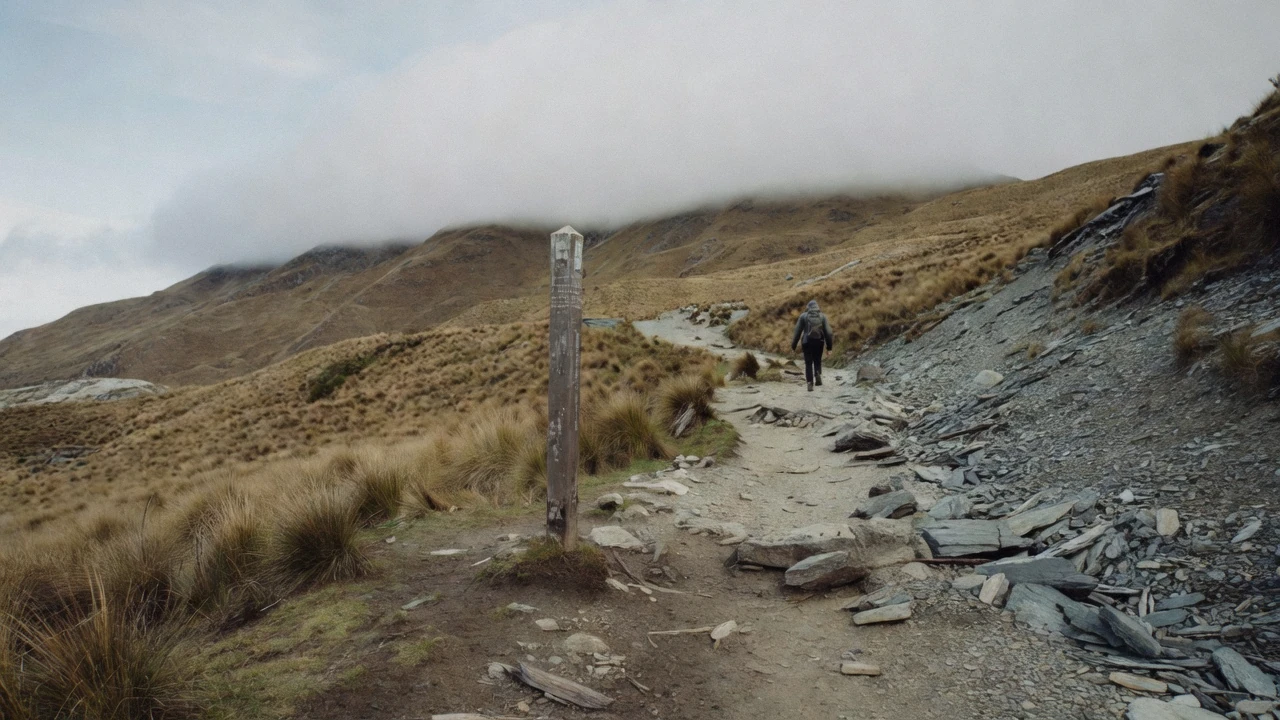
Is Queenstown Safe? The Risk Here Is Water, Weather and the Track
Is Queenstown safe is almost always asked as a question about crime, and the answer starts with a different number: 8 to 10°C, the temperature of Lake Whakatipu in every month of the year. What actually injures visitors here is that water, a mountain track that becomes an alpine route the moment there is snow on it, and a weather system that turns a booked day into a cancelled one without warning. Two things exist to protect you and almost nobody tells you about them: a public WorkSafe register that says whether the company you are about to pay has passed an independent safety audit, and ACC, the national accident scheme that pays for a visitor's treatment and pays nothing at all toward getting you home. This page is built on those two, with the Queenstown Lakes District Council water rules and the Department of Conservation's alpine warnings underneath. What the weather does month by month is on Queenstown weather by month; everything else this town offers is compared across the rest of this the rest of this Queenstown city guide.
Quick answer What actually hurts people here, and the two checks nobody makes
Queenstown is a safe town with a dangerous landscape around it. The Queenstown Lakes District Council's own boating guide records Lake Whakatipu as 80 km long, 293 km² in area, over 300 m deep for more than half its length and sitting at 8 to 10°C, which is cold-shock water on a 25°C summer day. The Department of Conservation treats the Ben Lomond Track above the gondola as an alpine route in winter, requiring an ice axe, crampons and avalanche equipment. Against that, New Zealand gives you two protections most visitors never use: every commercial adventure operator must be registered with WorkSafe after an independent safety audit, and that register is public; and ACC covers a visitor injured in an accident without you buying anything. Emergencies are 111. Prices on this page are US dollars converted from New Zealand dollars at the European Central Bank rate of NZ$1 = $0.584.
Key takeaways
- Before you pay for a bungy, a jet boat, a raft or a guided walk, type the company name into the public WorkSafe adventure-activity register and check that its status reads Current for the activity you are booking.
- ACC pays for your treatment and nothing toward flying you home, which is why ACC's own page tells visitors to buy travel insurance anyway.
- The lake is 8 to 10°C year-round and lifejackets are compulsory on any craft six metres and under, paddleboards included.
- When the weather cancels a booking, the operator decides on the morning: the Shotover jet boat checks the river each day, and every platform listing we track carries free cancellation up to 24 hours before the start time.
The Five Hazards That Actually Send Visitors to Hospital
Each row pairs the hazard with the figure the responsible authority publishes for it, rather than with a risk score. Sources are the Queenstown Lakes District Council boating guide, the Department of Conservation's track and Fiordland pages and the NZ Transport Agency's road guidance, all read in Q3 2026.
| Hazard | What the authority publishes | What it changes for you | Who publishes it |
|---|---|---|---|
| Cold water | Lake Whakatipu is over 300 m deep for more than half its length and sits at 8 to 10°C | Treat a fall in as a cold-shock event, not a swim; lifejackets are compulsory on craft 6 m and under | Queenstown Lakes District Council boating guide |
| Alpine ground above town | Ben Lomond in winter needs an ice axe, crampons and avalanche equipment, with steep drop-offs from the track | The walk that starts at the gondola is not a town walk between roughly May and November | Department of Conservation |
| Avalanche terrain | The Routeburn crosses more than 32 avalanche paths, and the risk can extend into December | Outside the Great Walks season the hazard is not managed and you assess it yourself | Department of Conservation |
| Weather on the roads | SH94 to Milford closes without notice for avalanche control; chains may be needed June to November, and driving past a chains sign can bring a NZ$750 police fine | A booked fiord day is a road-status question before it is a boat question | NZ Transport Agency and DOC |
| Fiordland conditions | Cold temperatures, snow, strong winds and heavy rain can occur at any time of year, with avalanche danger May to November | Pack for winter on a fiord day whatever the Queenstown forecast says | Department of Conservation |
Lake figures and lifejacket rules: the QLDC Lake Whakatipu boating guide. Track and Fiordland wording: DOC's Ben Lomond page and its Routeburn page. Road and chain rules: the NZ Transport Agency's SH94 travel tips. Nothing in this table is a probability, because no New Zealand authority publishes one for these activities.
Check the Operator on the WorkSafe Register Before You Pay
This is the most useful thing on the page and almost no travel site publishes it. Everything below is from WorkSafe New Zealand's own register and its explanatory page, read in Q3 2026.
New Zealand regulates commercial adventure activities. An operator selling a bungy jump, a jet boat ride, a raft trip, a tandem skydive, a guided alpine walk or a caving trip must be registered with WorkSafe New Zealand, and registration is not a form: it requires passing an independent safety audit. WorkSafe's own description of the list is flat and useful: “This is a public list of registered adventure activity operators. Registered operators have passed a safety audit and are authorised to provide the stated activities for the stated period.” Providing an adventure activity without registration is an offence unless the operator is excluded under regulation 4(2) to 4(5) or holds a WorkSafe exemption.
Around 315 operators were listed when the register was read on in Q3 2026. That is the entire regulated adventure industry of a country, searchable, free, in about fifteen seconds.
Here is how to use it. Open the public register, or the searchable interface at register.worksafe.govt.nz, and type the trading name of the company you are about to book — not the name of the tour, the name of the business that runs it. Read two fields. The status must say Current: WorkSafe uses Current for an operator that has passed its audit and is authorised, Cancelled for one no longer authorised, and Suspended for one not authorised during a stated period. Then read the activities the registration covers, because authorisation is granted activity by activity, and the period it runs for.
A Cancelled or Suspended status, or a company that does not appear at all, is not proof of anything criminal — some operations are excluded by regulation. It is, however, exactly the moment to ask the operator directly why, and to book somebody else while you wait for the answer.
What the Register Does Not Tell You
It is a licence check, not a review. The register says an operator passed an audit; it does not publish the audit, it does not rank operators, and it publishes no incident history against a name. WorkSafe's explanatory page sets out the scheme rather than the record of any one company.
So use it as a floor, not a recommendation. Above that floor, the things that separate operators here are ordinary and visible: how firmly they cancel for weather, whether the safety briefing is a script or a conversation, and whether the age, weight and medical limits are published before you pay rather than discovered at the desk. Those limits are on each activity page here — the Kawarau bridge bungy, the Nevis, the tandem skydive — taken from the operators' own terms.
ACC Pays for the Injury and Nothing Toward Getting You Home
Both halves of this section are quoted from ACC's own page for visitors injured in New Zealand, read in Q3 2026. The second half is the one that costs people money.
New Zealand does not have a personal-injury lawsuit system. It has ACC, and ACC's wording is that its “no-fault scheme covers everyone, including visitors, who are injured in an accident in New Zealand”, regardless of residency status. It can help pay medical, health and treatment costs. Your health provider lodges the claim on your behalf, so there is no application to make at the moment of injury, and a claim can be made up to 12 months after the accident.
For a visitor this is genuinely unusual. A broken wrist on a Coronet Peak slope or a torn ligament on a mountain-bike trail is treated and largely paid for by a scheme you never joined and never contributed to. It applies to the adventure activities as much as to a fall on the footpath.
Then comes the sentence to read twice. ACC does not cover illness, “disrupted travel plans or emergency travel to get you back home”, “injuries while in transit to or from New Zealand”, travel around New Zealand in the craft you arrived in, or “treatment and rehabilitation when you get back home”. Repatriation is the expensive part of a serious skiing injury and ACC pays none of it. A stretcher on a long-haul flight, a medical escort, a rebooked family, a course of physiotherapy in your own country: all of that is yours.
Which is why ACC itself gives the advice a travel-insurance salesman would give: “Make sure you buy travel insurance before your visit because we don't cover” those things. When a New Zealand government agency tells visitors to insure themselves against the gap in its own scheme, that is as clear as consumer guidance gets.
What This Means for the Adventure Bookings
Two practical consequences. First, do not use ACC as a reason to skip travel insurance; use it as a reason to read the medical-repatriation limit on the policy you buy, because that is the line ACC leaves uncovered.
Second, check the policy's adventure-activity wording against what you have actually booked. Bungy jumping, tandem skydiving, jet boating, heli-skiing and canyon swinging are named exclusions in a good many standard travel policies, and the adventure activities that make people come to Queenstown are precisely those names. The activity being legal, regulated and audited in New Zealand does not oblige your insurer to cover it. Read the list before you book the world's first bungy, not after.
Cover, exclusions and the insurance advice: ACC, if you're a visitor injured in New Zealand, read in Q3 2026.
The Lake: 8 to 10°C, and the Rules That Come With It
Every figure and every quoted rule below is from the Queenstown Lakes District Council's Lake Whakatipu boating guide and its lakes and boating page, read in Q3 2026.
Lake Whakatipu, Whakatipu Waimāori, is 80 km long, covers 293 km², and is over 300 m deep for more than half its length. Its water sits at roughly 8 to 10°C. On a still January afternoon at 25°C it looks exactly like a lake you would swim in, and every year people go in off a paddleboard or a jetty and discover that 9°C water empties the lungs before it chills the body. That is the fact this whole section rests on: it is not a cold lake, it is a cold-shock lake, in every month.
The council's rules follow from the temperature. Lifejackets must be carried to fit everyone on board, and must be worn at all times by children 10 years and under. They must be worn on all recreational vessels six metres and under, kayaks included, while underway, and on any boat in rough or adverse conditions. Users of paddleboards and similar unpowered craft must wear a lifejacket or a full wetsuit at all times. If you hire a board on the town beach, that last sentence is about you, and it is a bylaw made under the Maritime Transport Act rather than a suggestion.
Speed rules matter to anyone renting a small boat. You must not exceed 5 knots — the council glosses it as a fast walking speed — within 200 m of the shore, within 200 m of a boat flying a diver's flag, within 50 m of any other boat, within 50 m of a person swimming, or with anyone's body outside the rails of a power boat. And you must be 15 years and over to operate any power boat capable of exceeding 10 knots, which includes dinghies and personal water craft.
The council's Harbourmaster takes enquiries 24 hours a day on 03 441 0499, and the guide's own instruction for anything worse than an enquiry is unambiguous: “For Emergencies, always call 111.”
On a Commercial Boat, the Rules Are the Operator's
None of the above applies to you as a paying passenger on a licensed vessel: the steamship and the lake cruises carry their own survey, their own crew and their own lifejackets, and the numbers to look at there are the boarding and mobility ones rather than the bylaw. The bylaw is for the moment you hire something yourself, which is where visitors get caught, because a paddleboard is rented in two minutes with no briefing worth the name.
The other lake fact worth carrying is the wind. Lake Whakatipu is a long narrow trench between mountains and it builds a chop quickly on an afternoon northwesterly. Operators cancel for wind more often than for rain, and a flat morning is not a forecast.
QLDC Lake Whakatipu boating guide and QLDC lakes and boating, read in Q3 2026.
The Tracks: the Walk Above the Gondola Is an Alpine Route in Winter
The track wording below is the Department of Conservation's own, from the Ben Lomond, avalanche and Routeburn pages, read in Q3 2026.
The Ben Lomond Track starts at the top of the Skyline gondola, above the town, in sight of the restaurant. Visitors therefore treat it as a town walk, and in summer that is roughly fair. In winter the Department of Conservation's language changes completely: you need to carry and be able to use alpine equipment including avalanche equipment, an ice axe and crampons, there are steep drop-offs from the track on the way to the summit, and the whole thing is more treacherous under snow and ice.
That is not a warning about a remote mountain. It is a warning about the walk that begins where the gondola drops you, and it is why the Ben Lomond track page prints times and turnaround advice rather than a photograph. If you want height above Queenstown in winter without any of that, the Queenstown Hill walk is the honest substitute.
DOC's instruction for anyone going into the mountains here is to check the New Zealand Avalanche Advisory alongside the weather forecast, and it publishes a Wakatipu, Wānaka and Central Otago avalanche page for the region. It also runs a live alerts page listing current closures and hazards by region, which is the page to open the morning you walk rather than the week you plan.
The Routeburn and the Season That Is Not Managed
The Routeburn Track, reached from Glenorchy, is the clearest example in the district of a hazard that changes with the calendar rather than the weather. DOC records that the track crosses complex avalanche terrain with over 32 avalanche paths, some of which can bring debris to the valley floor and across the track, and that the risk can extend into December.
Here is the distinction that catches people. During the Great Walk season DOC manages that hazard and may close sections. Outside the Great Walks season the avalanches on the Routeburn are not managed, and walkers are expected to check the ATES terrain rating and the New Zealand Avalanche Advisory themselves. A track that is a well-signposted Great Walk in February is an unmanaged alpine crossing in September, on the same ground, from the same car park.
The Queenstown walks page sets out which tracks in the basin stay ordinary all year. Most of them do; the exceptions are the two above.
DOC Ben Lomond Track, DOC be avalanche alert, Wakatipu and Wānaka, DOC alerts, read in Q3 2026.
Fiordland: Sandflies, and Weather in Any Month
A Milford Sound day is a 12-hour round trip out of Queenstown into a different climate, and the Department of Conservation is blunt about what that climate does: “Cold temperatures, snow, strong winds and heavy rain can occur at any time of the year”, with avalanche danger from May to November. Pack for winter on a fiord day in February, because the Queenstown forecast is not the Fiordland forecast and the boat deck is where you will want to stand.
Then there are the sandflies, te namu, which are the most complained-about hazard in Fiordland and the least dangerous. Here is where we have to be honest about our own sourcing. DOC's advice that insect repellent containing DEET is effective, along with covering up in long light layers, keeping moving and antihistamines for anyone who reacts badly, appears in the department's Fiordland material and reaches us through search. The specific Fiordland “know before you go” page fetched on in Q3 2026 carried weather, avalanche, gear and biosecurity advice and no sandfly section at all. So the repellent advice is printed here as DOC's, with that caveat attached, rather than as a quotation from a page we opened.
The practical version does not depend on the source anyway: buy repellent in Te Anau or Queenstown before you go, put it on before you get off the coach rather than after, and cover your ankles. Sandflies are a coastal and lakeshore insect, and the boat itself, once moving, is largely free of them.
Weather and avalanche wording: DOC Fiordland National Park, know before you go, read in Q3 2026. Sandfly advice: DOC Fiordland material via search, not present on the page fetched.
Crime, Walking at Night, and the Number Nobody Publishes
Now the question people actually type. Queenstown is a small resort town of a few thousand permanent residents that hosts a very large number of visitors, with a late-night bar strip in the centre and a police presence that reflects both. The realistic risks are the ordinary ones of any town with that shape: opportunist theft from unlocked cars and hostel rooms, bags left on a bar table, and alcohol-related trouble on the same two streets after midnight. Walking back to a central hotel at night is unremarkable here in a way it is not in many larger cities.
What this page will not give you is a crime rate, and it is worth saying why. New Zealand Police publish victimisation and proceedings data through Police Data NZ at police station and police district level; on in Q3 2026 there was no official New Zealand Police figure published as a crime rate for the town of Queenstown. The “risk scores” and one-to-ten safety ratings that dominate this search result are not attributed to New Zealand Police, and several of them are generated rather than reported. A number with no authority behind it is worse than no number, because it feels like information.
The scams question has a similar answer and a more useful shape. There is no Queenstown-specific tourist scam that any authority warns about: no fake ticket sellers at the wharf, no taxi meter trick published by the council or the airport. The one thing that repeatedly costs visitors money here is not criminal at all, which is paying a commercial intermediary for something the government sells directly. That is dealt with in full on the NZeTA and visitor levy page; the New Zealand Traveller Declaration is free, and anything charging for it is a reseller.
Geographic level of published crime data: Police Data NZ, read in Q3 2026.
111, the Urgent Care Clinic and the Hospital in Frankton
Addresses, hours and phone numbers below come from Health New Zealand | Te Whatu Ora and from the national health-services directory, read in Q3 2026.
The emergency number in New Zealand is 111, for police, fire and ambulance. It is not 911 and not 112, although 112 will also connect from a mobile. The council's boating guide repeats the same instruction for anything on the water: for emergencies, always call 111.
For an injury that is real but not an emergency, the first stop is Queenstown Medical Centre's after-hours and urgent care clinic at 9 Isle Street in the town centre, on 03 441 0500. The published hours are 09:00 to 20:00 Monday to Friday and 10:00 to 17:00 at weekends and on public holidays, and that figure comes from the national health-services directory rather than from a page fetched on the clinic's own site, so treat it as indicative and phone before you walk. Clinic hours in this town move with the season.
The hospital is not in Queenstown. Lakes District Hospital is at 20 Douglas Street, Frankton, about 8 km out along the lake, with a 24-hour emergency department entered from Lucas Place and general enquiries on 03 441 0015. It is a small rural hospital: major trauma and complex care are transferred to Dunedin or Invercargill. That is the sentence behind everything on this page about serious injury — the definitive care for a bad accident in Queenstown happens several hours away, and the helicopter that gets you there is why the ACC repatriation gap is a travel-insurance question rather than an academic one.
Getting to Frankton without a car is a Route 1 bus, priced on getting around Queenstown, or a taxi.
Everything else this town asks of a visitor, from what a day costs to which walk suits which morning, is set out across the rest of this what else there is to do here.
Lakes District Hospital, Health New Zealand; Queenstown Medical Centre hours from the Healthpoint national directory. Both read in Q3 2026.
When the Weather Cancels Your Booking
This is the safety story that plays out most often, because a cancelled activity is an operator deciding, correctly, that today is not the day. Knowing how each one decides saves an argument.
The pattern is a morning call, not a forecast. Shotover Jet checks river conditions each morning; the ride runs in light rain, and heavy rain or flooding can cancel it. NZONE allocates skydive times at booking and they are weather-dependent, which is why a jump slot moves rather than vanishes. RealNZ's fly-cruise-fly Milford day asks guests to call an hour and a quarter before departure for the weather decision. SH94 to Milford Sound closes without notice for avalanche control and in bad weather, so the fiord day can end before it starts for reasons that have nothing to do with the boat. On the ski roads, NZSki's instruction is to carry chains at all times regardless of the weather in town, and on SH94 driving past a sign requiring chains can bring a police fine of NZ$750.
And here is the negative finding. No Queenstown operator page read for this site publishes a weather-cancellation cut-off time or a stated refund percentage. There is no “decision made by 07:00” and no “50 per cent refunded if cancelled on the day” on any operator page we could open on in Q3 2026. What every platform listing we track does carry is free cancellation up to 24 hours before the start time, on all but two of the tours compared here, and those two say to check the option booked. That 24-hour window is the only cancellation term published in advance, and it is the reason to book the fiord or the jet boat early rather than late.
The practical routine: keep a weather day. Put the Milford Sound day or the flight-dependent activity early in the trip so a cancellation has somewhere to move to, and have a rainy-day plan that does not depend on the sky.
What to Read Next
Three pages that carry the practical half of what this one warns about.
Weather by month
Temperature, rainfall and what closes: Queenstown weather by month, from thirty years of climate data.
- Thirty-year normals
- Rain days per month
- When the roads need chains
Getting around
The bus to the hospital in Frankton and the roads that catch drivers out: getting around Queenstown.
- NZ$2.50 with a Bee Card
- Route 1 to Frankton
- Chains on the ski roads
NZeTA and the visitor levy
The one thing here that genuinely costs visitors money to get wrong: the NZeTA and the visitor levy.
- Allow 72 hours
- NZ$100 levy, never refunded
- The declaration is free
Queenstown Safety: Questions
Is it safe to walk at night in Queenstown?
Generally yes, and it is what most visitors do, because the centre is small and the walk from the bar strip back to a central hotel is a few minutes. The realistic night-time risks are alcohol-related trouble on the two main streets after midnight and opportunist theft from bags left on tables, rather than anything specific to this town. This page prints no night-safety score because no New Zealand Police figure is published as a crime rate for Queenstown, and the scores you will see elsewhere are not attributed to the police.
What is the crime rate in Queenstown?
Not published, at least not at that level. New Zealand Police release victimisation and proceedings data through Police Data NZ by police station and police district, and on in Q3 2026 there was no official crime rate for the town of Queenstown itself. The one-to-ten safety ratings that fill this search result are generated by the sites publishing them rather than reported by the police, which is exactly why the crime section describes the pattern of offending here instead of inventing a number.
How do I check that a Queenstown adventure operator is safe?
Search the company's trading name on WorkSafe New Zealand's public adventure-activity register, which lists every registered commercial operator in the country, roughly 315 of them. Registration requires passing an independent safety audit, and the status field must read Current for the activity you are booking rather than Cancelled or Suspended. It is a legal floor rather than a review — the register section explains what it does and does not tell you — but it takes fifteen seconds and no travel site publishes it.
Do I need travel insurance for New Zealand if ACC covers accidents?
Yes, and ACC says so itself. ACC's no-fault scheme covers everyone including visitors injured in an accident here, and your health provider lodges the claim for you. What it does not cover is illness, disrupted travel plans, emergency travel to get you home, injuries in transit to or from New Zealand, or treatment once you are back. Repatriation after a serious ski injury is the expensive part and ACC pays none of it. Check that your policy names the adventure activities you have actually booked, because many standard policies exclude bungy and skydiving.
Is the lake safe to swim in?
People do swim, briefly, from the town beaches in summer, but the water sits at roughly 8 to 10°C all year and the council records the lake as over 300 m deep for more than half its length. That is cold-shock water regardless of the air temperature, and the danger is the first thirty seconds rather than hypothermia. If you are on the water rather than in it, lifejackets are compulsory on any craft six metres and under while underway, and paddleboard users must wear a lifejacket or a full wetsuit at all times, as the lake section sets out.
What should I beware of on the walking tracks above Queenstown?
Winter conditions on ground that looks like a town walk. The Department of Conservation says the Ben Lomond Track needs an ice axe, crampons and avalanche equipment in winter and has steep drop-offs on the way to the summit, and it starts at the top of the gondola. Check DOC's alerts page and the New Zealand Avalanche Advisory on the morning you go rather than the week you plan, and remember that outside the Great Walks season the Routeburn's 32-plus avalanche paths are not managed by anyone. Details are in the tracks section.
What happens if my Queenstown activity is cancelled for weather?
The operator makes the call on the morning — Shotover Jet reads the river daily, the fly-cruise-fly Milford day asks you to phone an hour and a quarter before departure — and you are normally rebooked or refunded. No operator page read for this site publishes a cancellation cut-off time or a refund percentage in advance, which is a genuine gap. What is published is the platform term: almost every listing tracked here carries free cancellation up to 24 hours before the start time. Book the weather-dependent day early in your trip so it has somewhere to move to.
Before You Book: Three Films Worth the Time
One official explanation of the regulated-operator scheme, and two practical run-throughs of what New Zealand's outdoors asks of a visitor.
New Zealand Adventure Activities Certification Scheme
Tourism New Zealand's own explanation of the audit-and-registration regime behind the WorkSafe register.
Video: Tourism New ZealandNew Zealand - Watch BEFORE You Go! Essential Travel Tips NZ
A practical briefing on driving, weather and outdoor conditions, which is where the real risk sits here.
Video: CJ Explores10 Essential Tips and Things To Know Before Visiting NEW ZEALAND
Useful for calibrating distances and daylight, the two things visitors most often get wrong before a track.
Video: Peter and YenVideos load from YouTube only when you press play.
Reviewed Q3 2026 (July–September 2026); next review Q4 2026. Prices, hours and terms are set by the venue or operator and confirmed at checkout.
We may earn a commission if you book through one of our links, at no extra cost to you. Full affiliate disclosure